
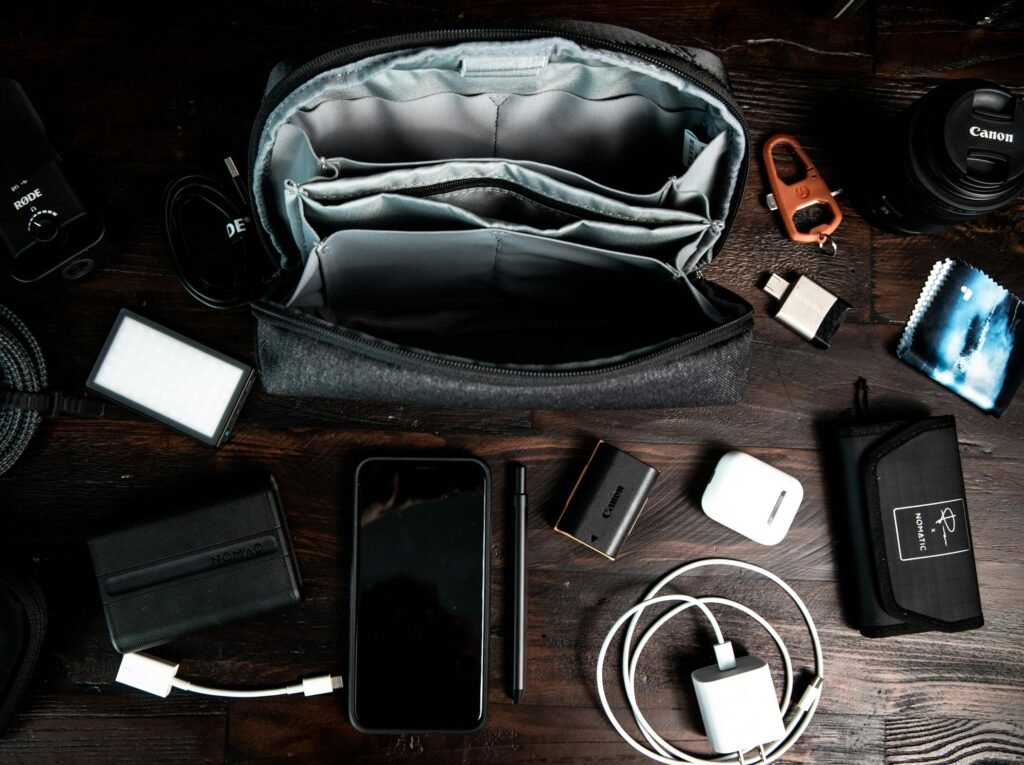
Not all phone accessories are useful. Here’s how to pick chargers, cables, cases, and power banks that actually improve your daily life.
Most people buy phone accessories in a hurry: cheap cable at the gas station, random case from a bin, the first charger they see online. The result? Broken cables, slow charging, dead ports, and phones that look like they survived a war.
Choosing better mobile accessories doesn’t mean spending a fortune. It just means paying attention to a few key details.
For chargers and power banks, the most important number is output power (W) and safety. A modern phone usually benefits from 18W, 20W, or higher. If your charger only does 5W, your phone will charge slowly. Look for accessories that support fast charging standards like Power Delivery (PD) or Quick Charge from trusted brands.
For cables, don’t chase the cheapest option. A super thin, no-name cable might work for a week and then start disconnecting or overheating. Look for reinforced connectors, thicker cable jackets, and real reviews that mention durability.
For cases, think about how you actually use your phone. If you drop it a lot or work in a rough environment, a shock-absorbing, slightly thicker case is worth it. If you keep your phone in a bag with keys, screen protectors and raised edges on the case help avoid scratches.
Headphones and earbuds are a whole world by themselves, but one rule is simple: if you use them a lot, comfort matters just as much as sound. An “okay” sounding pair that you can wear for hours is better than an “amazing” pair that hurts your ears after 20 minutes.
In short, good mobile gear should do one of three things:
✅ protect your phone
✅ make it more convenient to use
✅ help it last longer
Anything else is just decoration, and you don’t need to spend money on that unless you really want to.